
Plan your GA customs stop with GA Customs
Before an international flight, use the GA Customs airport-of-entry finder to check airports, hours, fees, and notes. Download GA Customs on the App Store before you go.
The GA Customs app can make the arrival side of an international trip less painful. It cannot make a marginal weather day workable, reopen a closed port of entry, or remove the pressure of getting your family home on Sunday night. That distinction matters when you're planning a flight to the Bahamas, Canada, Mexico, or the Caribbean several days ahead.
For most pilots, “GA Customs app” means CBP ROAM, the U.S. Customs and Border Protection mobile reporting tool used by many private aircraft operators returning to the United States. It is useful. But like every part of an international operation, it works best when the trip has been thought through before the bags are loaded.
See the airport details before you leave
!Map view of U.S. airports of entry
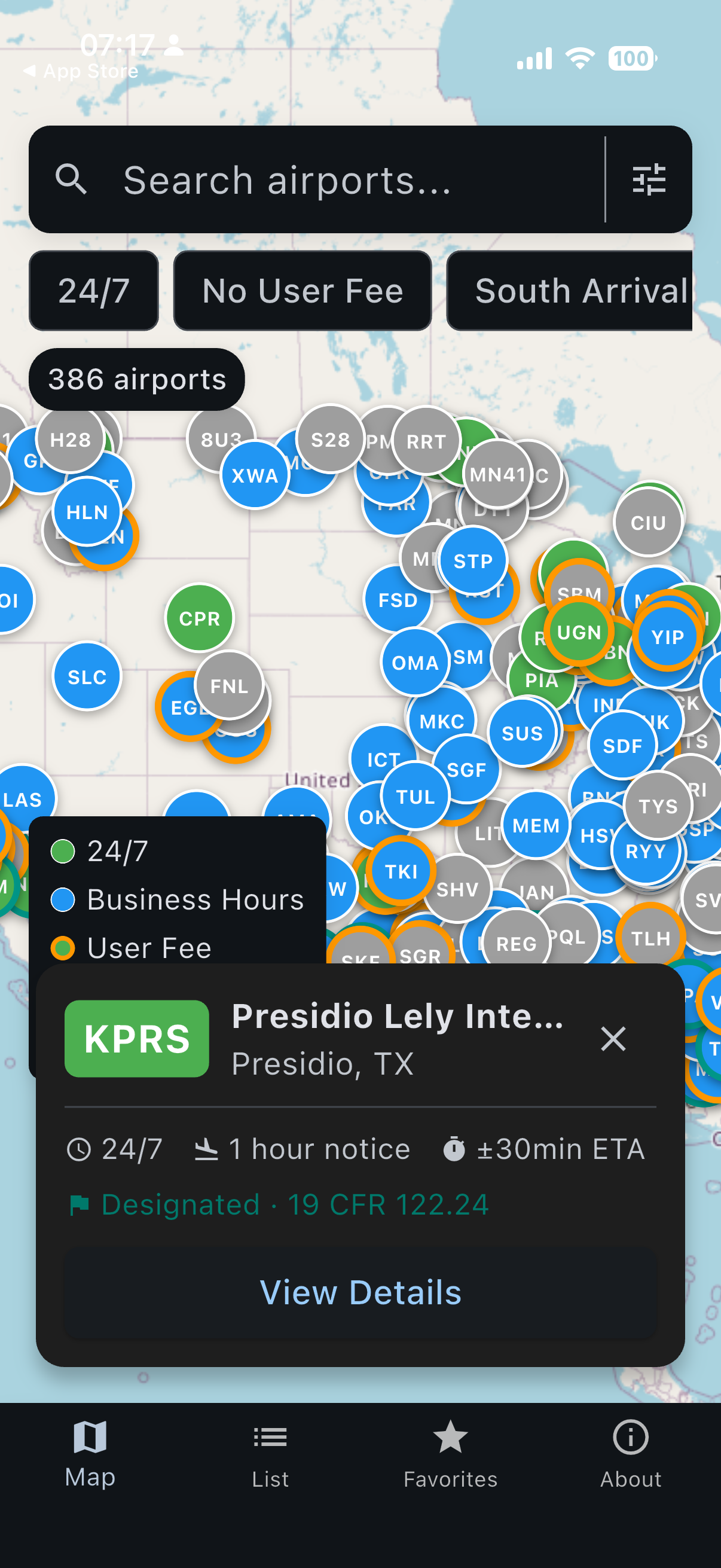
Map view of nearby airports of entry.
!Airport hours and requirements
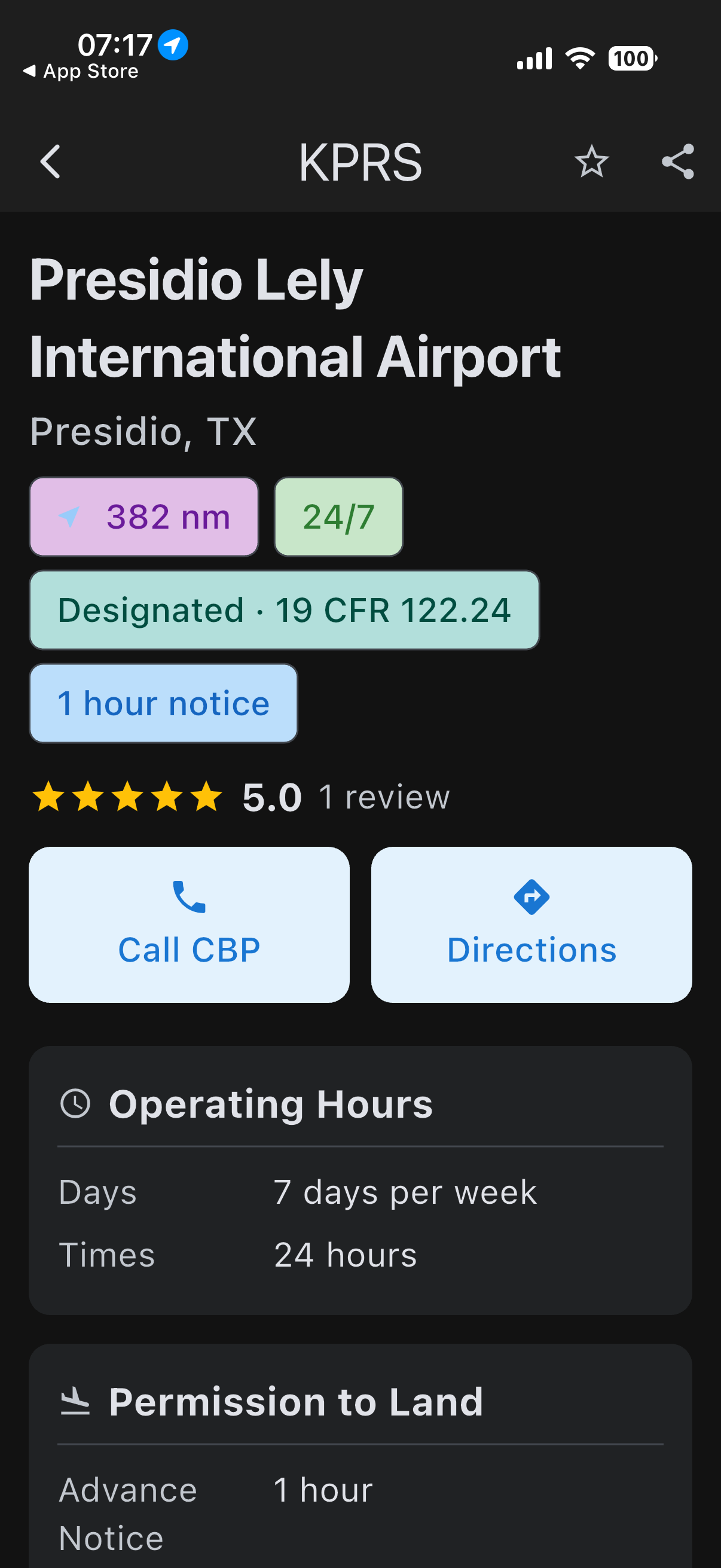
Airport hours and advance-notice details.
!Customs arrival process and reviews
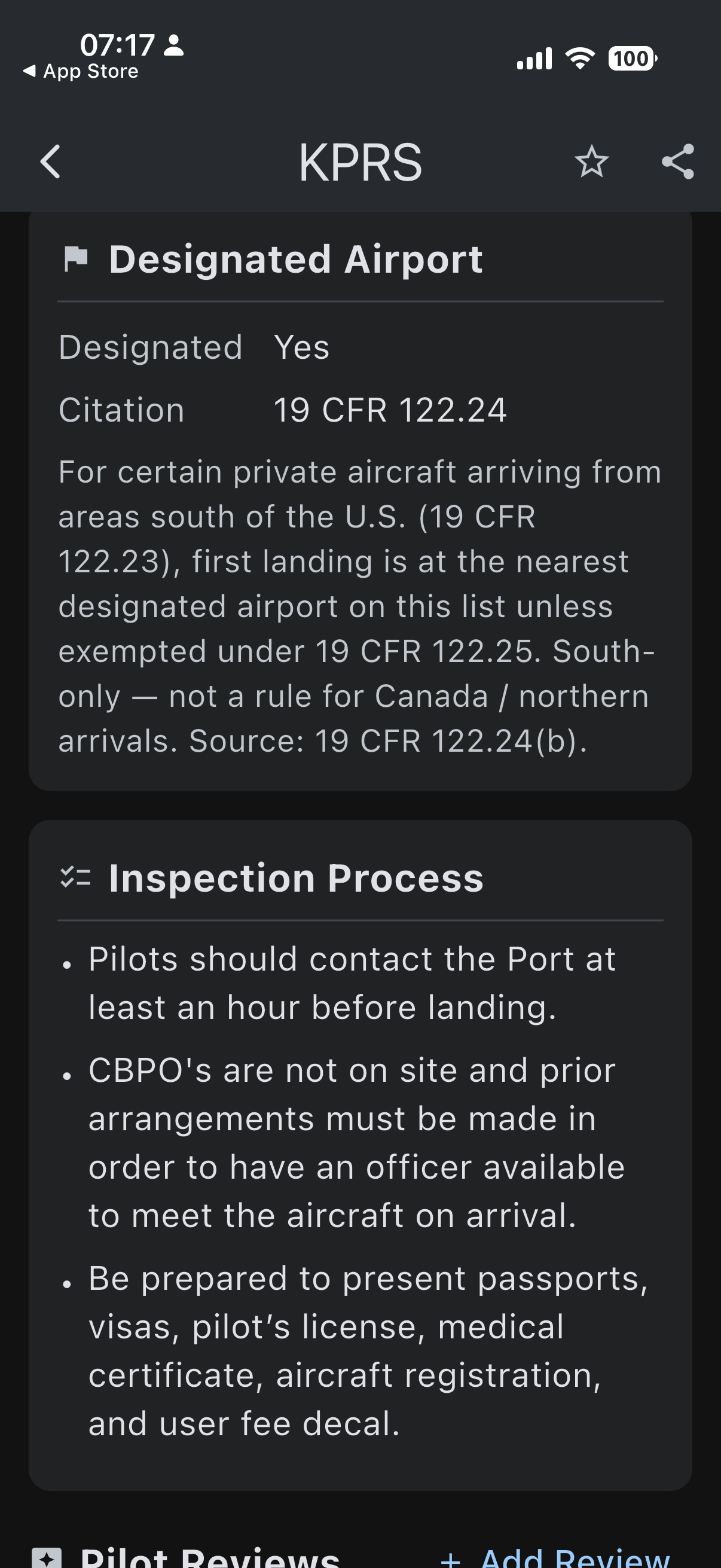
Arrival process details and pilot reviews.
What the GA Customs App Can and Cannot Do
ROAM can help eligible pilots submit arrival information and communicate with CBP for certain general aviation arrivals. Depending on the airport, the mission, and CBP procedures, it may support a remote inspection or help coordinate an in-person arrival. It is a practical tool to have set up before departure, not something to download while descending over the shoreline with spotty cell coverage.
What it does not do is eliminate the rest of your border-crossing responsibilities. You may still need eAPIS filings, advance notice, a confirmed airport of entry, passports and aircraft documents, and compliance with the specific procedures at your destination and return port. Some airports and circumstances require an in-person inspection, landing rights, or other coordination. Verify the process directly with the port you intend to use rather than assuming an app workflow applies everywhere.
That is the first planning lesson: customs is not a single checkbox. It is a time-sensitive part of the mission, tied to an airport, an arrival window, passengers, aircraft information, and a weather-dependent ETA.
Weather Can Break a Perfect Customs Plan
A customs plan is only as good as your ability to arrive when and where you said you would. A line of convection over Florida, low ceilings along the Great Lakes, or a forecast headwind that adds an hour to the return can turn a tidy plan into a series of phone calls.
The hard part is that these trips often become emotionally committed long before the weather picture is settled. Hotel deposits are paid. Friends expect you. The rental car is reserved. Your passenger has arranged childcare for Monday morning. Then, 72 hours out, the model guidance starts showing a frontal boundary near your return route.
That is when pilots need more than a current METAR and a TAF. Those remain essential close to departure, along with PIREPs, SIGMETs, AIRMETs, radar, winds aloft, and the rest of a normal preflight workflow. But early in the decision cycle, the question is different: Is this weather pattern becoming more favorable, holding steady, or deteriorating enough that I should change the plan now?
A forecast that is merely “flyable” at the planned customs airport may not be enough. Consider the entire chain: departure weather, enroute alternates, fuel margins, the arrival window, and the weather at a realistic diversion airport. If the return depends on a narrow VFR opening or a single IFR arrival option with thunderstorms nearby, the better choice may be changing the return day before you leave the country.
Build Flexibility Into the Return Leg
The most useful international-trip habit is treating the return customs stop as a waypoint with consequences, not a fixed appointment carved in stone. Choose it with alternatives in mind. Know which nearby ports can handle your aircraft and passengers, what their operating hours are, and what happens if weather or winds move your ETA.
Then give yourself margin. If the forecast favors a morning marine layer, do not plan an arrival that only works if it burns off on schedule. If a cold front is expected to cross your route late afternoon, an earlier departure may protect both the weather margin and the customs plan. A fuel stop before the border may be smarter than pressing on with shrinking options.
This is also where experience and personal minimums matter. One pilot may be comfortable taking a well-equipped aircraft through a stable IMC forecast to a familiar airport of entry. Another may correctly decide that an unfamiliar coastal airport, gusty crosswinds, and a tight inspection window are too many variables for the mission. Neither decision comes from an app. Both should come from an honest PAVE assessment.
Decide Earlier Than the TAF Window
PlaneWX was built for this stage of planning: the days before TAFs can tell the full story, when you need to decide whether to book a flexible hotel, leave a day earlier, or tell the family the return may move. Its Synoptic Intelligence™ brings together the Area Forecast Discussions along your route and calibrates that picture against NOAA probabilistic guidance, producing a personalized WX Score based on your aircraft, qualifications, and minimums.
That does not replace your preflight weather review. It gives you earlier visibility into the pattern that may eventually determine whether your customs plan holds together.
When you are ready to plan the airport side of the trip, review GA Customs and get the app on the App Store. Set it up before departure, confirm the requirements for your chosen port, and keep at least one weather and customs contingency in your back pocket. The confidence to go, or the courage to stay™, often starts with giving yourself enough time to choose.